
Art Story: Jigsaw Puzzle Game
ARTHUR PEIPuzzle
4.763.00 Reviews
- Version
- 3.3
- Installs
- 100.00K
- Age Rating
- Everyone
Screenshots
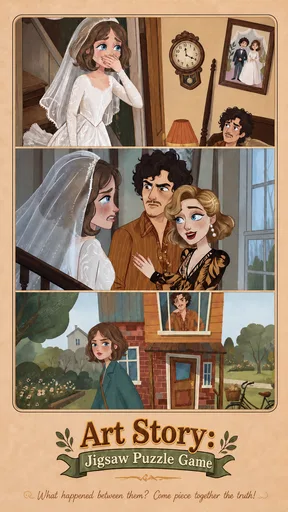
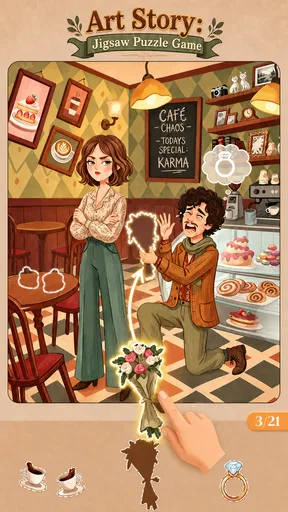
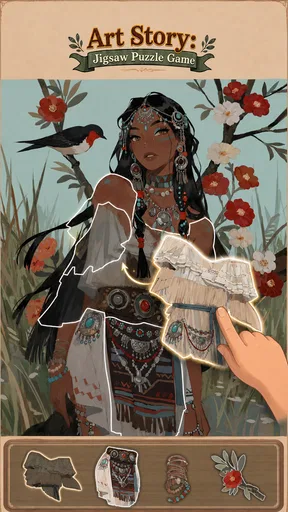
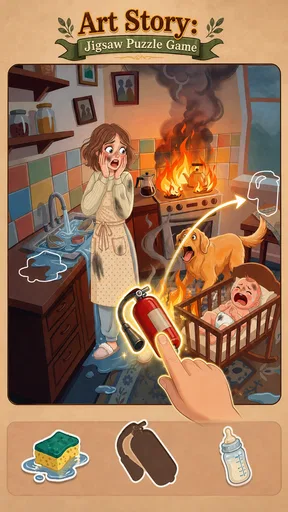
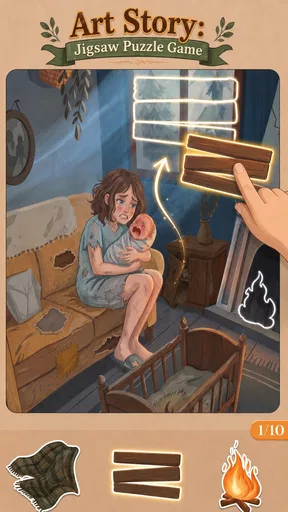
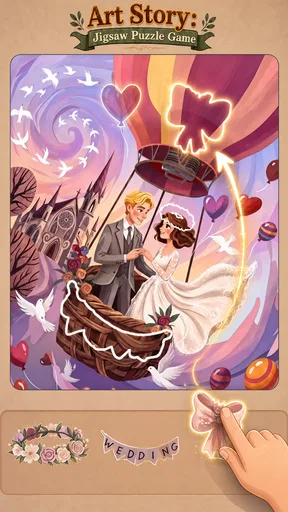
Our Review of Art Story: Jigsaw Puzzle Game
 Analysis by Appyee
I approached Art Story: Jigsaw Puzzle Game expecting a calm way to spend a few spare minutes, and that is still the clearest way to understand it. This is a free puzzle game from ARTHUR PEI built around artwork rather than speed, competition, or complicated rules. The store summary presents it as a way to relax with beautiful art, while the short description calls it “Art Story”; in practice, that combination gives the game a gentle, visual identity from the moment you open it.
My first impression was that it suits players who want a quiet activity they can pick up without studying a tutorial. You are not asked to learn a large control scheme or remember a long list of objectives. The appeal is the familiar satisfaction of fitting pieces together, with the artwork providing the reason to keep going. That makes it a natural choice for a short break, a slower evening, or anyone who enjoys puzzles but does not want the pressure usually attached to timed challenges.
The game is listed as a puzzle title for Everyone, so it is easy to recommend to a broad household audience. It is available free of charge, although optional purchases range from $1.99 to $99.99 per item. That difference matters: you can try the core experience without paying, but you should treat any purchase prompt as a choice rather than part of the basic entry point. I would begin with the free experience and decide later whether the available extras genuinely improve the way you play.
Starting comfortably and understanding the first puzzle
I start with the first puzzle as a chance to learn the visual rhythm without turning it into a test. I’d choose an image with clear color changes, then look for one corner or recognizable cluster rather than trying to solve the whole picture at once. That small, visible goal makes it easier to tell whether the pieces feel comfortable to handle and whether the game’s unhurried pace suits me.
What to expect when you open it
The useful mindset is to approach Art Story as a visual relaxation game, not as a traditional competitive puzzle app. The artwork is the main source of motivation, while the act of arranging pieces supplies the small, repeatable decisions. If you enjoy slowly recognizing edges, colors, and patterns, the format should feel familiar quickly. If you prefer puzzles with a narrative that changes dramatically after every move, the experience may feel more restrained.
That restraint is one of its strengths. There is less mental overhead than in logic games that ask you to calculate several moves ahead, and less urgency than in match-based games that constantly encourage another round. I found the basic appeal easy to explain to a friend: choose a picture, settle into the arrangement, and let progress come from noticing relationships between pieces. It is a good fit for attention that is available but not unlimited.
The game’s audience response also suggests that this simple idea has connected with many players. It holds an average rating of 4.7 from around 2K ratings, with more than 100K installs. Those figures do not replace personal taste, but they do make the game look like an established choice rather than an obscure experiment. ARTHUR PEI has kept the presentation focused enough that a first-time player can understand the purpose without being buried under systems.
The first setup should stay simple
On an Android device, the listed minimum operating-system requirement is Android 7.0, which makes the game accessible to a wide range of compatible phones and tablets. I would still make the first launch a deliberate one: use a comfortable screen, turn down distractions, and give yourself enough time to finish the opening interaction instead of testing it while rushing between tasks. A larger display can make visual sorting more comfortable, especially when pieces share similar shades.
There is no reason to overthink the initial choice. Start with the artwork that immediately catches your eye rather than trying to identify the “best” image. A familiar subject can make the first puzzle easier because you already have an idea of its broad shapes and colors. An image with clear contrast is another sensible starting point; it lets you learn the handling of pieces without making every decision depend on tiny visual differences.
Because the game is free to start, I would avoid spending anything during the first session. First find out whether the movement, piece size, and general rhythm suit your hands and patience. The optional purchase range is wide enough that a new player should not treat a quick prompt as a recommendation. My practical rule is simple: complete an initial puzzle, notice what you actually enjoyed, and only then consider whether an optional item has a clear purpose for you.
Your first meaningful success
The first real success is not merely opening a picture. It is recognizing a small group of pieces that belong together and using that discovery to create a visible section of the image. I recommend beginning with the border if the pieces make that distinction clear. Straight edges reduce the search area, and a completed corner gives you a stable reference point. From there, look for strong color changes, repeated textures, or recognizable objects rather than comparing every piece with every other piece.
This approach is more effective than random tapping because it turns the puzzle into manageable visual questions. Instead of asking, “Where does this piece go?” ask, “Which part of the image has this color or texture?” Once a few pieces are connected, the surrounding area becomes easier to read. The satisfaction comes from that gradual change: a pile of unrelated shapes starts becoming a scene you can understand.
A useful habit is to work in short clusters. If you find several pieces that appear to belong to the same region, keep your attention there until the group either grows or clearly stops making sense. Constantly jumping across the whole image feels active, but it often increases confusion. I get better results by finishing a small visual idea before moving to another one, especially when the artwork includes large areas of similar color.
When the first section is complete, pause for a moment and use it as a map. Completed areas reveal the direction of nearby shapes and make the remaining pieces less anonymous. This is the point where the game becomes relaxing rather than merely fiddly. You are no longer handling isolated pieces; you are reading the artwork and letting the image guide the next decision.
Confusion that can slow a new player
The most likely early frustration is assuming that every piece should be judged by its color alone. In artwork-based puzzles, several pieces may share a similar tone while belonging to different parts of the image. I found it more reliable to combine color with edge shape, line direction, and the visual subject represented in that area. A blue piece may belong to a sky, water, clothing, or a shadow, and those contexts matter more than the color by itself.
Another common mistake is treating a difficult patch as evidence that the whole puzzle is too hard. When a section refuses to come together, I would leave it temporarily and move to a region with stronger landmarks. Returning later with more of the surrounding image completed often makes the earlier problem obvious. This is not giving up; it is using the completed artwork as additional information.
It is also worth resisting the urge to make speed the measure of success. Art Story works better when you allow yourself to sort, reconsider, and take a break. Players who normally rely on countdowns or score multipliers may initially find the lack of urgency unusual, but that is precisely why it can work as a decompression tool. The trade-off is that anyone seeking intense challenge or a competitive ladder should look toward a different type of puzzle game.
Purchase prompts can create a different kind of uncertainty for first-time users. Since the game is free but includes in-app purchases, read each option carefully and do not assume that tapping through is required to continue. I prefer to establish a no-purchase first session, then make an informed decision later. This keeps the opening experience focused on whether the puzzle itself is enjoyable.
How I would use it in an ordinary day
Imagine arriving home after work with enough energy for something small, but not enough for a demanding game. I would choose one artwork, complete a border or a recognizable section, and stop when my attention begins to fade. The unfinished puzzle can remain a gentle activity for another moment rather than becoming an obligation. That makes the game more suitable for fragmented free time than for players who need a clear competitive endpoint every time they play.
It can also work during a quiet family moment, provided everyone is comfortable sharing the same visual task. One person can identify likely areas while another checks shapes, turning the puzzle into a cooperative conversation without requiring a formal multiplayer system. I would not present that as a guaranteed feature or a dedicated mode; it is simply a practical way to enjoy a visual puzzle together on one device.
For children, the Everyone rating makes the game approachable in principle, but I would still choose the artwork and playing conditions thoughtfully. Younger players may benefit from beginning with high-contrast images and a small, clearly defined goal such as completing one corner. Adults may appreciate the same approach when they are tired, because it removes the pressure to finish everything in one sitting.
What changes as you continue
After the first successful puzzle, the next step is to refine your method rather than rush toward the most difficult-looking artwork. Try separating edge pieces mentally, then group interior pieces by visual region. Look for distinctive lines that cross from one piece to another, since those connections can be more dependable than broad color fields. These habits make the experience feel more intentional and reduce the amount of aimless searching.
I also recommend noticing which image types suit you. Some players enjoy detailed scenes because every piece offers a clue; others prefer cleaner compositions where progress is easy to see. If you become frustrated by a picture with many similar tones, switch to an image with stronger landmarks rather than assuming your technique has failed. The best puzzle is often the one that matches your current concentration, not the one that appears most impressive.
Version 3.3 is the current version, so keeping the game updated is a sensible part of normal use. I would not expect an update number alone to change your opinion of the core puzzle style, however. The important question remains whether arranging art feels satisfying to you. A newer version can improve the experience, but it cannot turn a calm visual puzzle into a fast action game, and it should not be judged by that standard.
The game’s rating and install count give it useful social proof, but the more important test is personal: do you enjoy spending time on an image when there is no score pushing you onward? If yes, the free starting point makes experimentation easy. If no, a logic game with explicit objectives, a timed puzzle, or a competitive jigsaw app may offer a stronger reason to return.
Who should choose it, and who should skip it
I would recommend Art Story to people who want a low-pressure puzzle built around visual attention. It is especially appealing if you like artwork, prefer gradual progress, and want something that can fit into a short break without demanding a long tutorial. It also makes sense for players who find ordinary jigsaw puzzles relaxing but want a portable version that does not require a table, a box, or the risk of losing physical pieces.
I would be more cautious about recommending it to someone who needs constant novelty, deep strategic planning, or measurable competition. The same calm structure that helps one player unwind may feel repetitive to another. If you want a puzzle to test reaction speed, track rankings, or introduce increasingly complex rules, this is probably not the right first choice. Likewise, players who dislike optional purchase prompts should remain attentive during the free experience and avoid buying anything until they understand the value.
Compared with a physical jigsaw, this game is more convenient and easier to pause, but it cannot reproduce the tactile feel of cardboard pieces or the shared table-space experience. Compared with a typical mobile logic game, it is more visual and less abstract, but it may provide less variety in the kind of thinking required. Compared with quick match-style puzzle apps, it offers a slower rhythm and less pressure, though players who depend on rapid rewards may find it understated.
My recommendation after settling into it
My advice is to give the game one unhurried session before deciding. Choose an artwork with clear visual landmarks, build a corner or border, and then complete one small interior cluster. That first meaningful success tells you much more than the opening screen: you will know whether the piece handling feels natural, whether the art keeps your attention, and whether the quiet pace is genuinely relaxing for you.
Keep your expectations specific. This is a free puzzle game from ARTHUR PEI with an art-focused identity, not a broad collection of unrelated game systems. Its best quality is the way it turns careful observation into a peaceful routine. Its main limitation is the same simplicity: players looking for competition, elaborate progression, or a constant stream of new mechanics may outgrow it quickly.
For me, that makes it an easy recommendation for a particular kind of player rather than a universal one. If you want to slow down, examine an image, and enjoy the small reward of making a confusing section readable, Art Story earns a place on your device. Start without paying, learn the visual rhythm, and let your first completed section decide whether the game deserves a longer place in your routine.
Verdict
Strengths of Art Story: Jigsaw Puzzle Game
- Relaxing gameplay suitable for short or extended sessions.
- Beautiful artwork gives completed puzzles a rewarding feel.
- Multiple difficulty levels accommodate beginners and experienced players.
- Offline play makes it convenient when traveling or without internet.
- Helpful progress tracking encourages you to finish unfinished puzzles.
Limitations of Art Story: Jigsaw Puzzle Game
- Some puzzles may feel repetitive after extended play.
- The smallest pieces can be difficult to distinguish on compact screens.
- Advanced content may require patience to unlock or access.
- Limited interaction beyond assembling puzzles may reduce long-term variety.
- Battery use can increase during longer puzzle sessions.
Similar Picks in This Category
View All
Block Blast!
HungryStudio4.8

Braindom: Brain Games Test
Lahana Game Studio4.6

AMAZE!
CrazyLabs LTD4.6

Sudoku - Classic Sudoku Puzzle
Oakever Games4.7

Art Puzzle - Puzzle Games
Easybrain4.8

Amaze GO!
Oakever Games4.9
Frequently Asked Questions
What is Art Story: Jigsaw Puzzle Game?
Art Story: Jigsaw Puzzle Game is a relaxing mobile puzzle app built around assembling illustrated artworks piece by piece. Instead of focusing only on speed or competition, it combines traditional jigsaw mechanics with a visually appealing art collection and a calm gameplay style. Players select a picture, choose a difficulty level, and complete the image by arranging scattered pieces correctly.
Is Art Story: Jigsaw Puzzle Game free to download and play?
The game can generally be downloaded for free, allowing players to try its core puzzle experience without an upfront purchase. However, free mobile puzzle games may include optional advertisements, in-app purchases, or extra content that requires payment. Before downloading, it is worth checking the current store listing for details about premium puzzles, ad removal, hints, and any other optional purchases.
Does the game work offline?
Art Story: Jigsaw Puzzle Game may allow users to complete downloaded or already available puzzles without a continuous internet connection, which makes it suitable for travel or quiet offline play. Nevertheless, an internet connection may still be required for advertisements, updates, new puzzle packs, cloud features, or purchases. Availability can vary by version, so test offline access after installation.
What difficulty levels and puzzle options are available?
The game is designed to accommodate different types of players by offering puzzles with varying numbers of pieces or difficulty settings. Easier layouts are useful for beginners and casual sessions, while more complex images provide a longer and more demanding challenge. Depending on the version, players may also find different artwork categories, hints, progress tools, or customization options.
Is Art Story: Jigsaw Puzzle Game suitable for children?
The calm, non-violent puzzle format can make Art Story: Jigsaw Puzzle Game appropriate for many children, especially those who enjoy visual challenges and creative activities. Parents should still review the recommended age rating, advertising settings, and possible in-app purchases before allowing independent play. If the app collects data or includes external links, parental supervision and device restrictions are also advisable.
Play our best games!


